By 8:15 a.m., the first worker in the office has already finished three jobs without touching a keyboard. An AI agent scanned overnight emails, pulled a renewal clause from a contract, nudged the CRM, and drafted a reply for the account manager to approve before the client sees it. Another sorted a pile of expense claims, flagged two that looked odd, and queued the rest for payment. A third booked a follow-up meeting by cross-checking calendars, project notes, and a support ticket that nobody remembered existed at 5 p.m. yesterday.
This is not a sci-fi office with robot morale issues; it is a management problem wearing a software badge. Microsoft’s 2026 Work Trend Index reports active agents inside its Microsoft 365 world rose fifteenfold in one year, and eighteenfold in large enterprises. The report draws on product telemetry and a survey of 20,000 workers across ten countries. This means agents are already part of normal business life, not a future possibility. The real question is not whether agents will show up—they already have. The question is who gives them work, who checks it, and who takes responsibility when they get it wrong.
The office that wakes up before you do
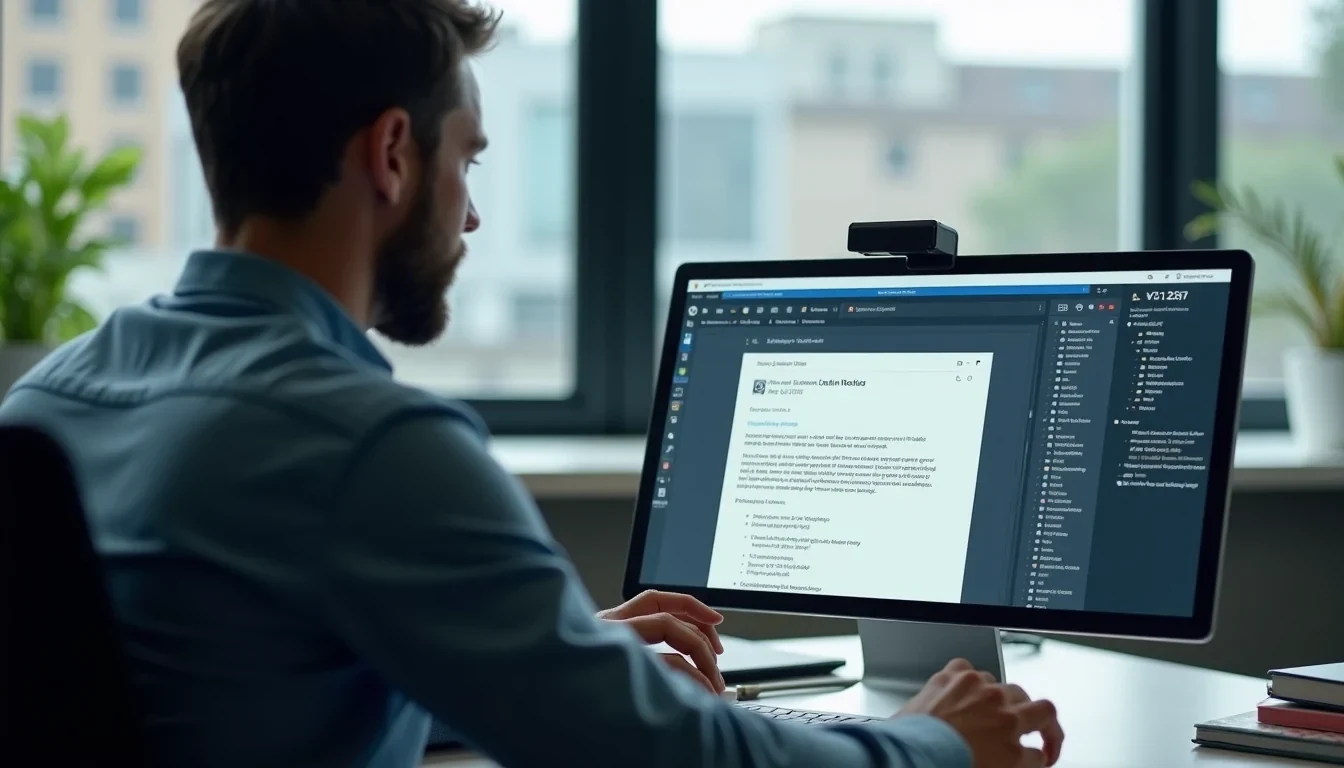
Picture a standard weekday in a medium-sized company. The sales lead opens Outlook and finds a tidy bundle of what looks like administrative magic. A Microsoft 365 agent has gathered the latest client notes, checked the contract history, drafted a renewal email, and logged a task in the team planner. The manager’s first decision of the morning is no longer whether to write the email, but whether the draft deserves to be sent.
That shift sounds small until you count the hidden steps. The agent collected information from several places, pushed updates into systems, wrote text, and completed part of a routine process with limited supervision. This is work, not trivia. It has a chain of dependencies, a quality bar, and a chance of going sideways in ways that are deeply boring right up until they are expensive.
Most offices are treating these systems like clever stationery. Someone asks one to do a task, glances at the result, and moves on. There is no obvious manager for the digital worker, no roster, no handover log, no defined scope. A human who asked for the job at 9:02 a.m. becomes the supervisor by default. This is fine if the task is harmless, but terrible if the agent has access to client data, finance systems, or anything compliance-adjacent.
The boss is missing
The gap is not technical; the software can already fetch, draft, update, and route. The gap is organisational. If an agent is allowed to touch a CRM, a shared inbox, and an approval workflow, somebody needs to own its brief in the same way someone owns a team member’s job description. Otherwise, the office invents a ghost employee: broad access, fuzzy duties, no review cycle, and a remarkable ability to disappear when asked who authorised the action.
Accountability gets slippery here. If an agent sends the wrong file to the wrong client, who answers? The person who prompted it? The team lead who approved the rollout? IT, for giving it access? The vendor, for building the thing? In practice, the blame lands wherever there is least resistance. This is not a governance model; it is a panic pattern.
Companies already know how to avoid this with humans. You do not give a junior staffer the power to sign contracts, move money, or issue public statements without rules, supervision, and consequences. Yet plenty of workplaces are handing software the digital equivalent of a master key and then acting surprised when nobody can explain the chain of command. If an agent is doing repeatable work, it needs a named owner, a defined scope, and a log of what it touched. If it can do damage, it needs a human checkpoint before the damage is irreversible.
Checking the machine’s homework
The only serious answer is to manage agents like junior staff with excellent memory and no judgement. This means a formal brief for each one: what it may do, what systems it may enter, what it must never touch, and which outputs need approval. It also means a review process that is not decorative. For low-risk tasks, a spot check may be enough. For anything involving finance, customer commitments, HR, legal, or personal data, the output should be reviewed before it escapes into the world.
A useful office would also keep score. Not in a vague “AI transformed productivity” sense, but with actual measures: error rate, turnaround time, number of escalations, and how often the agent needs correction. If a human colleague made the same mistake ten times in a month, management would notice. Software should not get a free pass because it sounds impressive in a demo.
The shadow version of this is already everywhere. Employees quietly use agents without formal approval because the tools are easy to access and the benefits are immediate. That creates the worst possible setup: no policy, no owner, no audit trail, and no way to tell whether a risky action was deliberate, accidental, or just badly phrased prompt theatre. A company that cannot explain its agent fleet cannot really say it has one.
The new desk job nobody asked for
The sensible future is agents with job descriptions, supervisors, permissions, and performance reviews. That sounds dull because it is. Dull is what you want when software can send emails, update records, and start workflows. The alternative is a workplace filled with invisible colleagues who can act, but who do not have to explain themselves.
The deeper shift is that management is becoming part of the product. Whoever deploys these systems is also taking on the burden of oversight, because the machine will not volunteer for accountability. A good office will make that visible. A bad one will discover, usually after the fact, that it hired a worker it never officially managed.