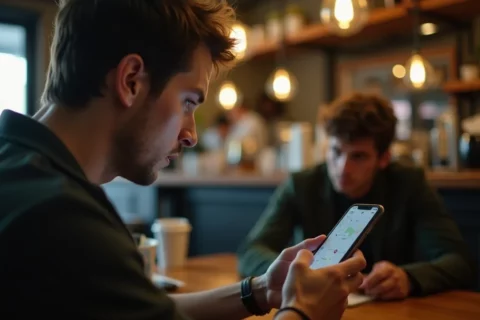
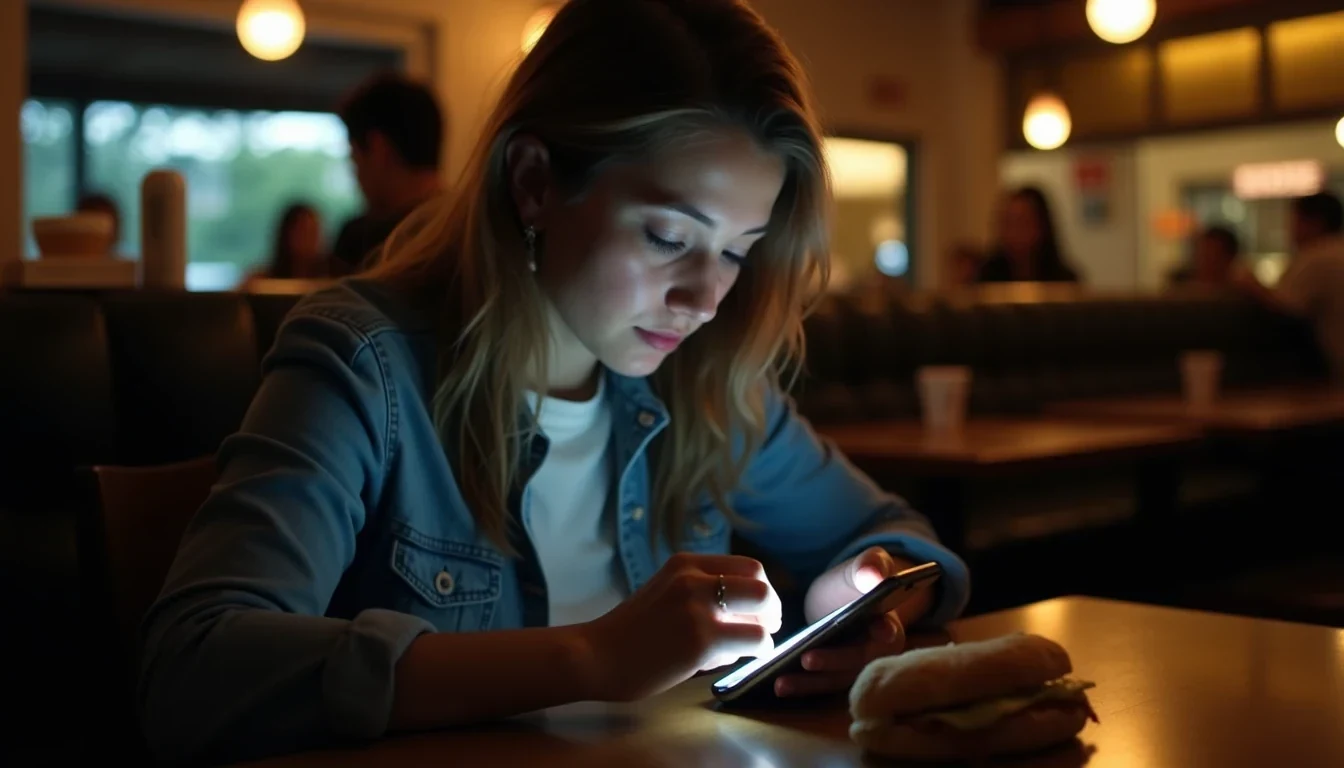
Half the people staring at their phones right now have not hit “post” in years. They scroll through lunch breaks, tap through holiday photos, laugh at videos they will never share. The platforms still count them as active users. Advertisers still pay to reach them. But the conversation has become a broadcast, and they have chosen the audience seats.
This is not a boycott or a deletion spree. It is quieter and more permanent. According to regulator Ofcom, 89% of UK adults who use the internet are on at least one social platform. Yet in 2026, only 49% of those users posted, shared, or commented on anything at all. Two years earlier, that figure stood at 61%. The drop is twelve percentage points in twenty-four months, and it tells a story the headline user numbers deliberately obscure. The platforms are full. The people inside them have gone still.
The Permanent Record Problem
The fear is specific and has memory. Almost half of adult social media users told Ofcom they worry that old posts could surface later and cause damage they cannot yet imagine. This is not paranoia about hackers or data breaches. It is the ordinary dread of context collapse, the moment a joke made for friends in 2017 becomes material for a hiring manager in 2027.
The mechanism is simple and brutal. A post survives. The platform’s search improves. Someone with a reason to look finds it. The person who wrote it has changed, or the world around the words has changed, and the post becomes evidence of something its author never intended to stand by. Employers now routinely scroll. Family members screenshot. Arguments that once stayed in rooms now have timestamps and share counts.
Users have responded not by leaving the platforms entirely but by shrinking their visible history. The permanent profile grid, once the main stage of self-presentation, is increasingly abandoned. In its place, temporary Stories have become the preferred format for those who still feel the urge to share. A Story disappears in twenty-four hours. It leaves no archive for future judgment. The trade is explicit: less reach, less permanence, less risk.
Why Posting Stopped Feeling Worth It
The reasons cluster around three kinds of consequence. Professional risk is the most commonly cited. A single visible post, even a like or a share, can reroute a career. The person who screens CVs does not know the context. They see the headline, the image, the association, and they move on to the next candidate. The original poster never learns why the conversation ended.
Family conflict operates closer to home. A relative sees a post about a political view, a relationship status, a night out, and the phone call comes before the comments section closes. The boundary between public performance and private life has collapsed, and many users have concluded that the safest family strategy is digital silence.
Personal embarrassment completes the triangle. The person who posted enthusiastically at twenty-two often winces at twenty-nine. The enthusiasm itself becomes the embarrassment, the oversharing, the certainty that anyone else cared. Growth becomes indistinguishable from humiliation when the record is frozen and searchable.
Behind all three sits a broader exhaustion. The labour of maintaining a public self, of generating content that feels authentic enough to post but safe enough to survive, has become another job performed without pay. Users who once treated platforms as outlets now experience them as obligations they have quietly resigned from.
The Hollow Promise of a Public Voice
Social media’s founding mythology held that everyone deserved a platform and that giving it to them would democratise expression. The reality has sorted into a different shape. A minority still posts actively: some professionally, some compulsively, some genuinely engaged. The majority watches. The platforms function increasingly as television networks with unusually detailed viewer data, not as town halls or conversation spaces.
This rebalancing carries consequences for what gets said and who gets heard. The voices that remain audible are those with the stomach for risk, the professional incentive, or the structural insulation to survive visibility. The cautious, the precarious, the simply tired have not disappeared. They have gone quiet, and their absence from the feed shapes the public conversation as surely as any algorithm.
The shift also changes the nature of what remains. Posts that do appear are more heavily curated, more self-conscious, more performatively safe. The spontaneity that early social media promised, the raw and unfiltered voice, now lives mainly in Stories and private messages, formats designed to evaporate. The permanent web becomes the polished web, and the polished web becomes less interesting to read.
The New Normal of Silent Scrolling
The Ofcom numbers suggest this is not a temporary correction. A twelve-point drop in active participation across two years indicates a settled preference, not a passing mood. The users who stopped posting are not waiting for a safer platform or a better policy. They have found a stable equilibrium in observation, and the platforms have adapted to serve them as consumers rather than creators.
For the social media industry, this presents a structural problem dressed as user engagement. Monthly active user counts still look healthy. Time spent on platform remains robust. But the ratio of creators to viewers has tilted toward television, and television’s advertising model is less lucrative than the promise of targeted social influence. The platforms know this. Their push into short-form video, their algorithmic promotion of strangers over friends, their desperation to make shopping native to the feed, all acknowledge that the social network is becoming the content channel.
For individual users, the calculation is more personal and already made. The phone still comes out at the bus stop. The feed still gets checked at midnight. But the thumb hovers over “post” and retreats. The moment passes into the stream of watched and forgotten content. The trace they refuse to leave is itself a choice, a small act of self-preservation in an economy that demands perpetual visibility. They are still there. They are simply no longer participating in the fiction that their voice was ever the point.