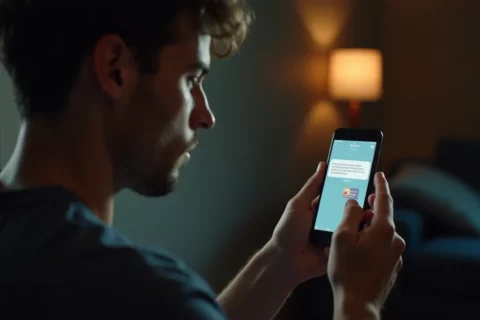

Thirty-seven percent of American adults have tried a dating app. Only six percent still have one on their phone. That gap shows the business model working exactly as designed.
The Success Rate They Do Not Advertise
Half of everyone who has ever swiped right, according to SSRS survey data from 2026, ended up in a committed relationship with someone they met online. One in two. That is a higher success rate than most investment portfolios, most gym memberships, most New Year’s resolutions. The apps have every right to celebrate this in their television commercials, their subway posters, their Instagram stories featuring photogenic couples who “met on Hinge.” They cannot, however, build a public company on a product that reliably deletes itself from customers’ lives.
This is the structural joke at the center of the industry. A dating app that actually works loses its best customers. The user who finds love on Tuesday stops paying for unlimited swipes on Wednesday. The platform’s advertised purpose and its quarterly earnings call exist in permanent tension, like a gym that secretly hopes you never get fit enough to cancel.
The six percent figure tells us most people figure this out. They arrive, they experiment, they leave. Some leave triumphant, ring boxes in pockets. Others leave exhausted, scammed, bored, or broke. The app does not particularly care which, so long as enough new arrivals replace the departures to keep the graph pointing up for investors.
Why People Actually Delete
Finding a partner is only one exit door, and probably not the most crowded. Talk to former users and you hear the same complaints often enough that they blur into a single sound: the thud of emotional fatigue.
Repetitive conversations rank high. The same opening lines recycled through algorithmic batches. The same three-question interview (Where are you from? What do you do? What are you doing this weekend?) conducted dozens of times with diminishing returns. The same ghosting, the same benching, the same slow realization that the person on the other end is simultaneously having this identical conversation with four other matches. The apps promise abundance and deliver assembly-line intimacy.
Then there is the money. Most platforms run on freemium economics: free to download, expensive to actually use. Seeing who liked you is behind a paywall. Unlimited swipes require a subscription. Appearing in more feeds, reversing an accidental left-swipe, or signaling urgent romantic interest all require in-app purchases, boosts, or premium tiers with metallic names. The pricing is not hidden. What frustrates users is the creeping sense that they are paying for friction reduction on a product designed to create friction. The app could show you better matches faster. Instead it shows you just enough to keep you swiping, then offers to sell you the shovel.
Safety concerns also drive deletions, and these are harder to dismiss as user impatience. Catfishing remains routine. Scammers operate at scale, particularly on platforms with weak verification. Harassment, unsolicited explicit content, and the low-grade anxiety of meeting strangers who may not be who they claim are features of any marketplace that prioritizes user volume over user vetting. Women in particular report calculating risk before every first date, a mental tax that no subscription fee covers.
The Retention Machine
Dating apps are not passive matchmakers. They are active retention engineers, and their tools are increasingly sophisticated. Daily suggested matches. Push notifications timed to moments of loneliness. Streak mechanics borrowed from social media. Features that create artificial scarcity (your daily “super like” allotment) or manufactured urgency (this person liked you, pay now to see them). Every design choice is A/B tested not for romantic success but for session length, for return rate, for that investor-metric holy grail: daily active users.
The algorithms themselves sit at the center of this contradiction. They are trained on engagement, not outcomes. A match that leads to thirty messages and three months of subscription payments scores higher than a match that leads to immediate deletion and a wedding invitation. The app does not know how to optimize for “met at a braai in Observatory, deleted the app, never thought about it again.” That story does not generate revenue. It generates churn.
Publicly, of course, the platforms lean into the romance narrative. They sponsor studies about relationship formation. They feature success stories in marketing materials. They speak the language of connection, of community, of finding your person. Privately, they report to shareholders in the language of retention, of average revenue per user, of lifetime value calculations that assume you will be single long enough to matter.
What This Means for Anyone Still Swiping
Dating apps are not useless. One in two success rates says otherwise. They are useful in spite of their design, not because of it. Users who find partners do so by treating the app as a narrow tool (introduction mechanism) rather than a comprehensive solution (relationship architect). They move quickly to real-world meetings. They do not let the conversation stagnate in the chat window. They delete the app the moment the connection justifies it, without waiting for the platform to confirm their choice was optimal.
For everyone else, the calculation is simpler and bleaker. The app needs you more than you need it, and it is built to make you forget this. Every notification, every paywalled feature, every algorithmic delay is a small argument against your own departure. The six percent who remain are not necessarily the happiest. They may simply be the most stuck, the most habituated, the most reluctant to admit that the product they are paying for is designed to never fully deliver.
The paradox resolves only when you stop expecting the app to act in your interest. It won’t. It can’t. The shareholders would not allow it.