
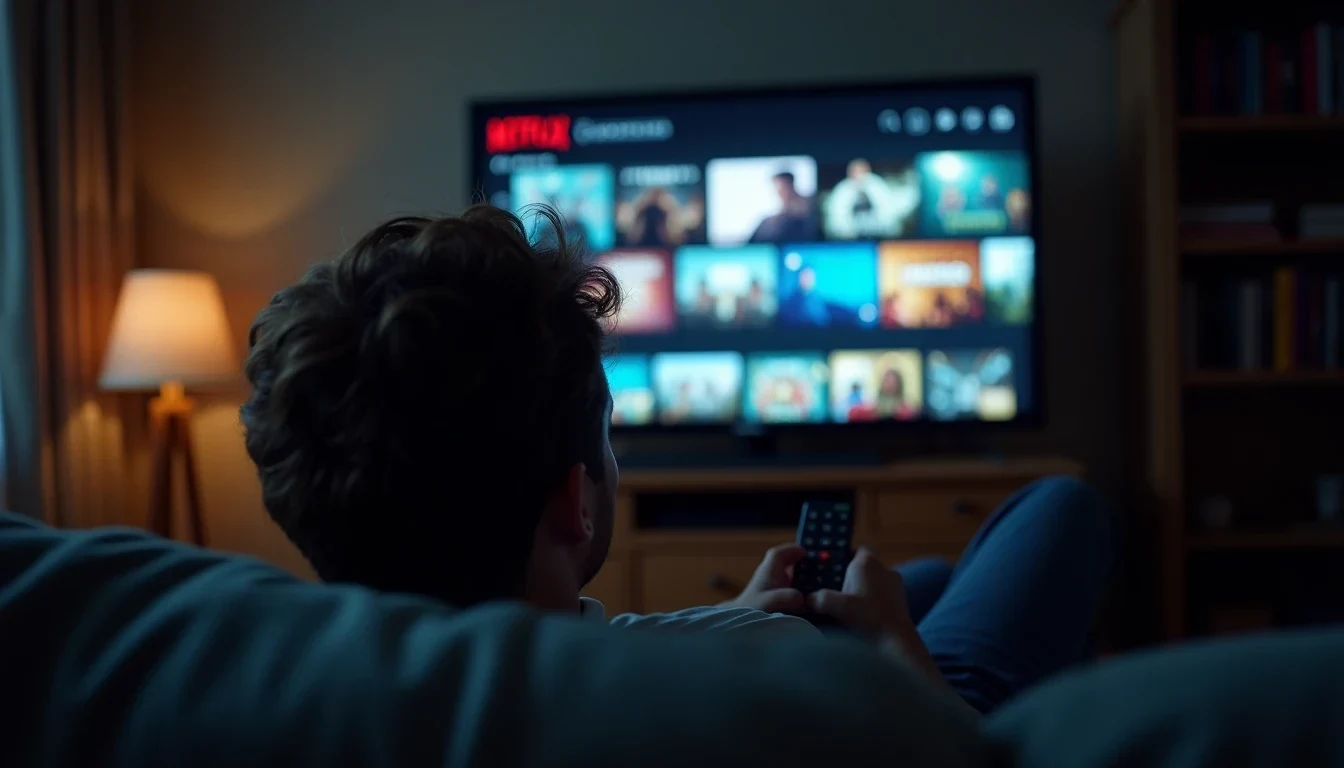
Twenty minutes. That is the average time a viewer spends staring at a menu before pressing play on anything. Netflix did not invent this particular form of paralysis, but it perfected the conditions for it. The company that began by posting DVDs in red envelopes has, in a generation, overtaken institutions that shaped British viewing habits for nearly a century. Ofcom’s Media Nations 2026 report puts the figure plainly: 26% of UK viewers now name Netflix as their first port of call when they want to watch something, against 25% for the BBC and 15% for ITV. A single percentage point separates the newcomer from the broadcaster that once defined what the nation saw, heard and talked about the following morning.
This is a story about what happened to the act of watching itself, not just about technology displacing incumbents.
The Scheduled Life and Its Absence
Traditional broadcasting imposed a structure that now seems almost quaint. Programmes arrived at fixed times, and viewers arranged themselves around them. You watched what was on, or you missed it. This constraint also eliminated choice before choice became a burden. Channel surfing offered a limited set of possibilities, and discovery happened by accident as much as by intention. You might stumble into a documentary about shipbuilding because nothing else held your attention, then find yourself absorbed.
Netflix removed that scaffolding entirely. The interface presents not a schedule but a vast catalogue. Tens of thousands of titles sit behind a grid of thumbnails, each competing for a click. The viewer must become an active selector where once they were a passive recipient. This shift from reception to curation looks like liberation on paper. In practice, it frequently produces a peculiar anxiety about whether the optimal choice is still three rows down, and whether committing to anything now might mean missing something better.
Barry Schwartz’s “paradox of choice” predates streaming by decades, but the streaming interface has become its most vivid daily demonstration. More options do not reliably produce more satisfaction. They often produce circular browsing, abandoned sessions, and the retreat to familiar rewatches. The platform’s algorithm attempts to solve this by predicting desire from past behaviour, yet the prediction itself becomes part of the noise. “Because you watched” recommendations can narrow the field without actually reducing the labour of decision.
Local Stories in a Global System
The BBC and ITV carry obligations that Netflix does not. Public service mandates require substantial investment in news, current affairs and programming that speaks directly to British life. These are structural commitments, enforced by regulation and funded by licence fees or advertising tied to domestic reach.
Netflix’s strategy has moved in a different direction, and recently in two directions at once. Its early original programming sought universal appeal: political thrillers about Washington, period dramas about the monarchy. These travelled well across borders because they required no specific national knowledge to enter. The platform has since discovered that local specificity can also travel. Squid Game emerged from South Korean production culture. Money Heist originated in Spain. The local became the global by accident as much as by design.
This creates a complicated position for British viewers seeking British stories. The BBC still produces them as a matter of institutional duty. Netflix might fund them if the calculation suggests international appetite, or if domestic retention requires it. The difference is not merely philosophical. It affects what gets made, who owns the rights, and whether a production company can build a lasting asset from its own work. Netflix’s deals have sometimes left local creators without the intellectual property they developed, a pattern that shapes what kinds of projects find backing in the longer term.
The Live Event Gap
One category remains where traditional broadcasting has not been displaced. Live events, real-time national moments, the shared experience of watching something unfold simultaneously with millions of others: these still belong to linear television. News, sport, major ceremonies. The infrastructure and rights acquisitions required are expensive and specialised, and Netflix has shown limited appetite for entering this territory at scale.
The platform has experimented. A Chris Rock comedy special in 2023 was delivered live, a proof of concept more than a strategic pivot. Reunion shows and similar unscripted events have followed. The core offering remains on-demand video, designed for individual timing rather than collective synchrony. The viewer who wants to watch the Olympics, a World Cup match, or a breaking news event still turns elsewhere.
This absence has a social consequence. The scheduled broadcast created temporary national publics, people who had little else in common but had seen the same thing at the same time. Streaming fragments this experience across time zones and personal calendars. The water-cooler conversation becomes harder to sustain when colleagues have reached episode six at different speeds, or have not started the series at all.
The Price of Unbundling
Netflix’s standard ad-free plan in the UK runs between £10.99 and £15.99 monthly. Traditional pay-television bundles, with their hundreds of channels and equipment requirements, typically command £50 to £100 or more. The comparison seems straightforward. Streaming arrived as a bargain, offering targeted content without the padding.
Then the arithmetic shifted. Netflix introduced its ad-supported tier at £4.99, reintroducing commercial interruption to viewers who had initially fled it. More significantly, the proliferation of competing services meant that recreating a full range of viewing required multiple subscriptions. The unbundling of content into separate platforms became, for many households, a rebundling by another name. The cumulative monthly outlay approaches or exceeds what cable once cost, without delivering the equivalent breadth of live and local material.
South African viewers will recognise the pattern. Local streaming options exist alongside international platforms, and the same calculation applies: how many subscriptions before the convenience becomes its own kind of burden? The particular services differ, but the structural problem does not. Each platform holds some desirable content exclusively, and no single subscription covers enough to eliminate the others.
What Twenty Minutes Costs
The browsing fatigue is not merely an irritation. It represents a genuine transformation in how leisure time is spent. Twenty minutes of decision-making before any content begins is twenty minutes not spent watching, and not spent doing something else either. It is time lost to the interface itself, to the promise of perfect choice that never quite delivers.
Some viewers solve this by retreating to rewatches, selecting comfort over novelty because the comfort requires no evaluation. Others develop elaborate systems: external recommendation lists, social media consensus, deliberate limitation of options. The platform’s design assumes that abundance is the feature. For a significant portion of users, abundance has become the bug.
Netflix won its position by removing one kind of friction, the friction of schedule and availability. It has not solved, and may not wish to solve, the friction that replaced it. The menu is the product as much as any individual title within it. The viewer who opens the app intending to relax finds, increasingly, a small administrative task awaiting them first.