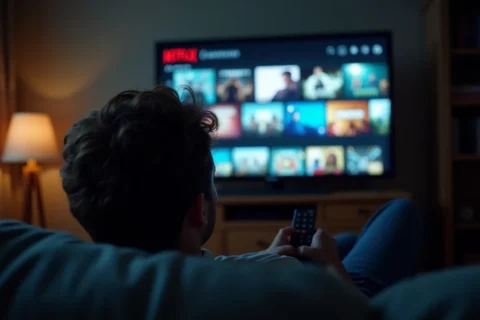
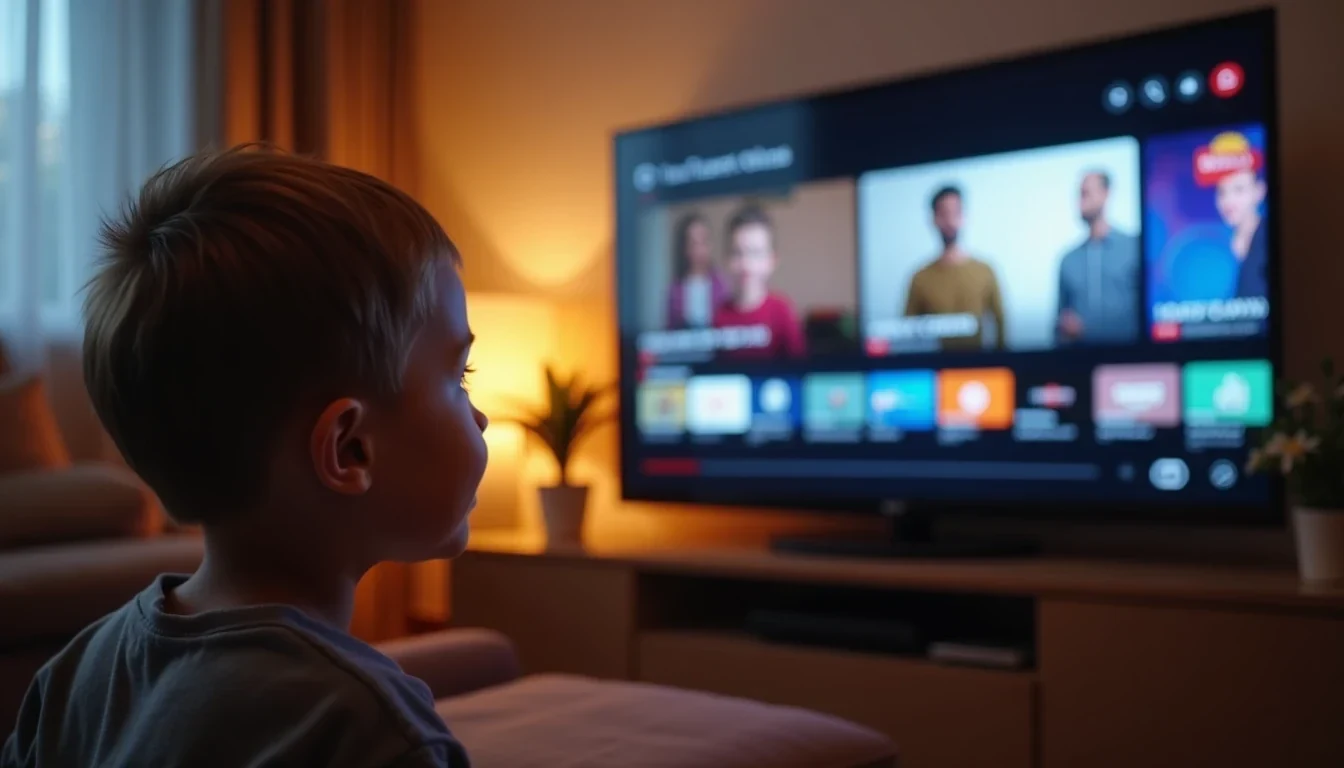
The algorithm used to live in your pocket. It knew your commute, your insomnia, your secret fascination with medieval siege engines. Now it sits on the coffee table, passed between hands, learning a family instead of a person. By July 2026, UK regulator Ofcom will report that YouTube viewing on television sets has doubled since 2022. Older viewers are driving this growth, not teenagers, and they are not watching on phones.
The Living Room Becomes the Battleground
This is not a subtle shift in device preference; it is a land grab. YouTube has spent years as the background noise of solo moments: waiting rooms, lunch breaks, the half-hour before sleep. The television screen changes the stakes entirely. The largest screen in the house commands the most attention, and YouTube now competes directly with DStv, Netflix, Showmax, and the remaining linear broadcasters for that fixed pool of evening hours.
The numbers from Ofcom are stark. Between 2021 and 2022, the share of UK adults watching YouTube on a television set jumped by twenty percent, reaching more than a third of all adults. That was before the projected doubling. South African data is less granular, but the infrastructure is there. BrandMapp’s 2023 survey found smart TV ownership above seventy percent among affluent South Africans. The screen is ready, and the behavior is following.
Traditional broadcasters built their model on appointment viewing, on the shared national moment. Subscription streamers replaced that with individual profiles and personal queues. YouTube arrives with something more chaotic and possibly more powerful: a single algorithm trying to please everyone at once, learning in real time from whose fingers last touched the remote.
One Remote, Five Different YouTubes
Consider a single household in Johannesburg’s northern suburbs, a scenario playing out across similar homes in Durban, Cape Town, and Port Elizabeth. The television is a Samsung smart model, three years old, YouTube app pre-installed. No one has bothered setting up separate profiles.
Morning belongs to the six-year-old. She navigates by thumbnail color, selecting animated nursery rhymes and toy unboxing videos with the confidence of someone who has never known scheduled programming. The algorithm learns bright colors, simple songs, and repetition, so it serves more of the same. Her mother intervenes occasionally, steering toward educational channels, but the child prefers the ones with faster cuts and louder sound effects.
By afternoon the teenager claims the screen. His selections are deliberately obscure: gaming streams, commentary channels with inside jokes that baffle his parents, music videos from genres that did not exist five years ago. The algorithm, still warm from morning cartoons, stutters. It offers compromise content, fails, then rapidly pivots to match his watch history. Within twenty minutes the recommendations have shed their childish skin, and the six-year-old’s influence is erased.
Evening brings the parents. His search history runs to DIY repair tutorials and documentary channels, hers to cooking demonstrations and news analysis from independent creators. They rarely agree on a single video. The algorithm, confronted with this instability, defaults to broad appeal: viral clips, movie trailers, nature footage with universal visual impact. The specificity that made YouTube powerful on mobile dissolves into something closer to traditional television’s lowest common denominator.
The grandmother visits monthly. She watches classic music performances and gardening tutorials, her selections slow and deliberate, the remote control an unfamiliar object she grips too hard. Her sessions confuse the algorithm for days. The family notices odd recommendations persist, ghosts in the machine, until the teenager’s next marathon wipes them clean.
What the Algorithm Actually Learns
On a phone, YouTube’s recommendation engine operates with surgical precision. It knows your individual watch history, your search patterns, and your dwell time on thumbnails you did not click. The relationship is intimate and sustained.
The television breaks this model. The input is clumsier, a remote control cursor moving across a grid. Search is avoided; browsing dominates. The device history is a palimpsest, layers of contradictory preference overwritten daily. The algorithm cannot build a coherent profile because no coherent user exists.
What emerges instead is session-based adaptation. The system responds to immediate choices, shifting within minutes rather than days. A documentary selected at eight PM triggers related recommendations by eight fifteen, regardless of what played at six. The skip button, pressed impatiently by teenagers, becomes a stronger signal than completion. The algorithm learns to survive each session rather than cultivate a long-term relationship.
This has consequences for what gets made and what gets seen. Content that hooks quickly, reads clearly from a thumbnail at three meters, and does not require headphones to appreciate, gains advantage. The personal vlog, intimate and whispered, struggles on a shared screen. The polished documentary, the high-production tutorial, and the visually spectacular nature video thrive.
Creators Chasing the Couch
The shift is already reshaping what creators produce. Channels like Kurzgesagt and DW Documentary, with their dense information and cinematic animation, are built for this environment. Their viewership on television sets reportedly exceeds mobile in some demographics. The production investment is substantial: professional narration, original music, and fact-checking that bears scrutiny when watched collectively.
Smaller creators face pressure to adapt or accept marginalization. Raw, handheld footage that worked on a six-inch screen looks amateurish at fifty-five inches. Audio recorded on a phone speaker becomes unlistenable through a soundbar. The barrier to entry, historically YouTube’s democratic strength, rises with the screen size.
Engagement strategies change too. Mobile viewing encouraged immediate interaction: likes, comments, shares, the creator responding in real time to audience feedback. Television viewing is passive, social, and distracted by conversation in the room. Creators must now design for water-cooler discussion rather than comment-section community. The video must spark argument between family members, becoming reference points for household debate.
The Broadcasters’ Dilemma
South African broadcasters have watched this approach with understandable anxiety. DStv’s streaming pivot, the expansion of free ad-supported platforms, and the experimentation with shorter digital-first content all represent attempts to meet YouTube on territory it now dominates. The challenge is structural. YouTube pays nothing for content acquisition beyond its partner program. It bears no production risk. Its library is effectively infinite and continuously replenished by creators working for fractions of what broadcast budgets allow.
Yet the old model retains one advantage: intentionality. A family choosing Showmax knows, broadly, what they are getting. The algorithmic chaos of shared YouTube viewing, with its jarring transitions between a six-year-old’s cartoon and a teenager’s gaming stream, creates friction that curated services avoid. Whether that friction matters enough to drive viewers back to traditional platforms remains uncertain.
What is certain is that the living room screen, once the most controlled and hierarchical of media environments, has become contested ground. The algorithm no longer serves individuals. It mediates families, learning their conflicts, their compromises, and their strange collective tastes. The phone in your pocket still knows you better. The television in your lounge knows something more complicated: who wins when nobody agrees, and what gets watched when everyone gives up and lets the machine decide.