
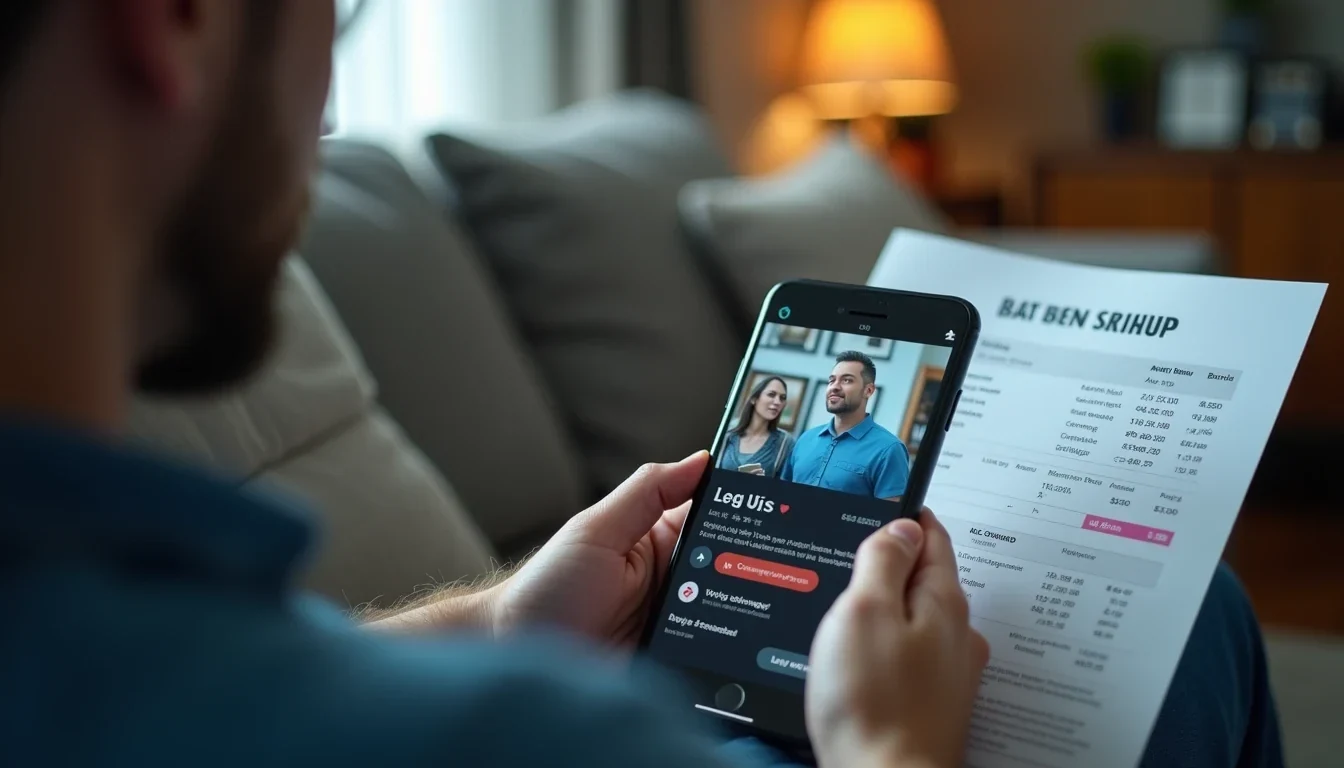
You now pay R69 a month to watch adverts on your phone. Showmax calls it a deal. The maths say you earn about R5.36 for every hour you spend staring at commercial breaks, assuming you stream two hours daily on their ad-supported Entertainment Mobile tier. That is less than the minimum wage, and you do not even get to choose what the adverts are selling.
Streaming was not supposed to work this way. The original pitch was simple: hand over a monthly fee and receive uninterrupted entertainment in return. No ad breaks sliced through the final act. No pharmaceutical commercials boomed at twice the volume of the show. The trade-off was explicit: you paid more than broadcast viewers, but your time belonged to you. That arrangement is eroding, and the erosion is deliberate.
The bargain is being rewritten
Deloitte’s 2026 US Digital Media Trends research, published earlier this year, found that 68% of streaming subscribers now use at least one ad-supported service. That figure represents a sharp jump from 2024 levels. Subscription prices have climbed steadily across every major platform, and households facing squeezed budgets are retreating to cheaper tiers that reintroduce the very thing streaming once defined itself against.
The irony is structural. Viewers originally paid to remove adverts. Now price increases have made the advert-laden option the only financially viable one for many. The platforms collect their monthly subscription fee regardless, then sell your attention to advertisers on top. You are paying for the privilege of being sold to.
South African households currently experience this pattern in patchwork form. Showmax offers the clearest local example: R69 monthly for Entertainment Mobile with adverts and 360p resolution, versus R99 for ad-free viewing at 1080p. Netflix and Disney+ have not yet launched ad-supported tiers here, so their subscribers remain in the old model, though for how long is unclear. Amazon Prime Video, currently R79 monthly and ad-free, has already introduced adverts in other markets with an opt-out fee of roughly R55. That structure will likely arrive locally.
What the hours actually cost
A household running Showmax Entertainment Mobile alongside Netflix Standard and Amazon Prime Video currently saves R30 monthly by accepting adverts on the single ad-supported tier. If Prime Video follows its global pattern and introduces a similar opt-out charge, that potential saving could rise to approximately R85 monthly. These are not trivial sums for stretched budgets. But they come with a time invoice that few subscribers calculate.
Industry standards for ad-supported streaming globally run between four and eight minutes of commercials per hour of content. That is substantially below traditional broadcast television, where advert loads can reach fifteen to twenty minutes hourly. The streaming experience feels less intrusive, which is precisely why it works as a psychological strategy. You notice the interruption less, so you tolerate what would have provoked channel-switching a decade ago.
Assume two hours of daily streaming on an ad-supported tier at the midpoint of that range, six minutes of adverts per hour. That produces twelve minutes of advertising daily, or eighty-four minutes weekly. Across a four-week month, you have surrendered five and a half hours to commercial breaks. For Showmax’s R30 saving, your effective compensation is that R5.36 hourly rate. The figure is not meaningless, but it is not generous either. It will not buy you a coffee at most Johannesburg cafés.
The targeted refinement of an old model
What distinguishes this from broadcast television is not the absence of adverts but their precision. Streaming platforms possess granular data on viewing habits, pause patterns, search behaviour, and household composition. The commercials you see are selected for you specifically, not sprayed across a demographic guess. This is the broadcast model refined by surveillance economics.
The refinement carries its own costs. Traditional television adverts were at least publicly visible. Regulators, competitors, and viewers could see what was being sold and how. Targeted streaming adverts operate in opacity. The same household may see entirely different commercial loads depending on profiles the platform has constructed. There is no transparent standard for how many adverts you will see, only the platform’s optimisation of your tolerance against its revenue targets.
For South African subscribers, the regulatory environment around this data collection remains underdeveloped. The Protection of Personal Information Act provides frameworks, but enforcement and specific streaming-sector guidance have not kept pace with platform practices. You are largely trusting companies headquartered elsewhere to self-police.
The arithmetic of surrender
The broader pattern is clear enough to trace. Streaming platforms invested heavily in content acquisition and production, borrowed or spent shareholder capital to build subscriber bases, then discovered that growth curves flatten. Price increases followed. Ad-supported tiers were introduced as “choice” or “flexibility,” language that obscures the underlying pressure. Households that resisted the increases by downgrading now find themselves in a position their parents would recognise: paying for access, then paying again with their attention.
The difference is the monthly fee still being extracted. Broadcast television, for all its advert saturation, did not charge a subscription. The new model keeps the subscription and restores the interruptions, capturing revenue from both ends. No platform is hiding this. The terms are stated plainly in pricing tables. But the framing as consumer choice deflects from the structural reality that prices were raised until choice became necessity.
For a typical South African streaming bundle, the current mathematics are modest because the ad-supported rollout remains incomplete. The direction is not. Each new tier introduction, each international platform following Amazon’s advert model, each price increase that nudges subscribers downward, expands the territory where you pay to watch what you already paid to avoid. The R5.36 hourly rate will not improve. The advert load may. The only certain increase is the platform’s revenue per subscriber, now harvested from two sources rather than one.