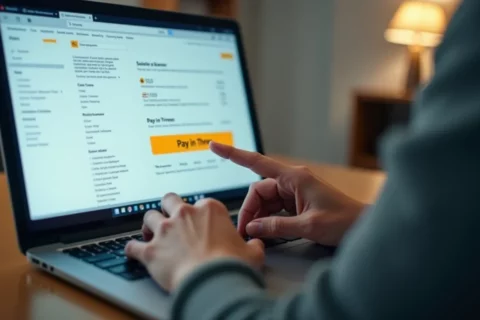
One in seven people using Buy Now, Pay Later services in Germany have no idea what they actually owe. That figure comes from BaFin, the country’s financial regulator, and it landed in 2026 after surveying active BNPL users about how well they understood their own commitments. The result is not surprising given how these products are designed. They do not feel like debt. Each purchase is split into three or four slices, each slice looks trivial, and the app congratulates you with a friendly confirmation screen. The psychological effect is deliberate: you are not borrowing money, you are simply “paying smarter.” Until the morning you wake up and cannot reconstruct what is due, when, and to whom.
The fragmentation trap
The problem multiplies when you use more than one provider. A pair of sneakers through Klarna, groceries through PayPal Pay in 4, a flight through a travel site’s own instalment plan, a birthday gift through Afterpay. Each operates in its own app, with its own dashboard, its own due date logic. Some debit weekly, some fortnightly, some monthly. Some pull from your cheque account, others from your credit card. None of them talk to each other.
BaFin’s finding that roughly 14% of users have lost track starts to look conservative once you map the cognitive load. You are not managing one loan with one statement. You are running a miniature treasury operation across four or five platforms, with no consolidated view. The individual amounts feel negligible, a few hundred rand here, a few hundred there. But “negligible” is a feeling, not a number, and feelings do not clear on payday.
The categories where this happens are almost too ordinary to trigger alarm: clothing and food delivery, small electronics, cosmetics, household decor. A R380 skincare order split into four payments of R95 does not register as a financial commitment. It registers as a decision you already made, already enjoyed, already forgot. The reassembly only becomes urgent when the deductions start landing and your account balance is R400 thinner than you expected.
The reassembly test
Stop reading and reconstruct every delayed payment currently attached to your name. Write them down: the provider, the original total, what remains, the due dates. Then compare that actual number against what you would have guessed if someone had asked you cold.
Most people who do this exercise discover a gap. The total is higher than the mental shorthand suggested. The due dates cluster more uncomfortably than expected. Some payment you were certain was finished turns out to have one instalment left. This is not a failure of intelligence; it is a failure of design. The product is built to divide, and your brain is not built to continuously reassemble what has been divided.
The comfort of BNPL is real. Spreading a cost smooths cash flow. But smoothing is not the same as reducing, and the convenience conceals a task that still must be performed. You must mentally put the pieces back together before payday, or the pieces will assemble themselves in your bank account without your consent.
When the tracking fails
The consequences of losing track extend beyond a single tight month. Late fees vary by provider, but they compound quickly across multiple platforms. A missed Klarna payment in the UK market carries a penalty up to £5. South African users face their own fee structures, often buried in terms and conditions that were accepted in two taps during checkout.
More seriously, missed payments damage credit records. Many BNPL providers now report payment history to credit bureaus, and defaulted accounts almost certainly will. A compromised credit score does not announce itself. It reveals when you apply for a car loan, a rental agreement, a mortgage, and the rate you are offered is worse than you expected, or the application is declined outright. The small purchases that felt like nothing have become something that follows you for years.
Debt collection is the final stage. Unpaid balances get sold or assigned to agencies whose business model is recovery, not sympathy. The original R400 purchase has now generated fees, interest, credit damage, and the stress of persistent contact from people whose job is to make you pay.
What actually works
The solution is boring and effective: a single spreadsheet or note on your phone. Every BNPL purchase gets logged: provider, total cost, instalment amount, remaining balance, every due date. That list gets checked weekly, not monthly. Calendar reminders are set two days before each debit, not the day of. Where possible, consolidate providers rather than chasing the newest checkout option. One or two platforms are trackable; five or six are not.
Some budgeting apps can pull this together automatically, though they vary in whether they capture BNPL obligations accurately. The manual method fails less often because the act of entering the data forces recognition. You are not a user experiencing seamless checkout. You are a person who owes money, and the entry reminds you.
The deeper fix is harder: stop using BNPL for purchases you could make outright. The product has legitimate uses, such as a necessary flight when cash is temporarily tight or a work expense you will reclaim before the next instalment. But using it for R300 of cosmetics or a food delivery you could have paid for with cash is not financial management. It is financial fragmentation for its own sake, and fragmentation is how one in seven people lose track of what they owe.
BaFin’s survey was German, but the behaviour is not. South African BNPL usage has grown sharply, with local and international providers competing for checkout space. Regulatory attention will follow, eventually. Personal attention cannot wait for that. Reconstruct your payments now, before the next debit run, and compare the real total against what you believed. The gap between those two numbers is what this article was written to close.